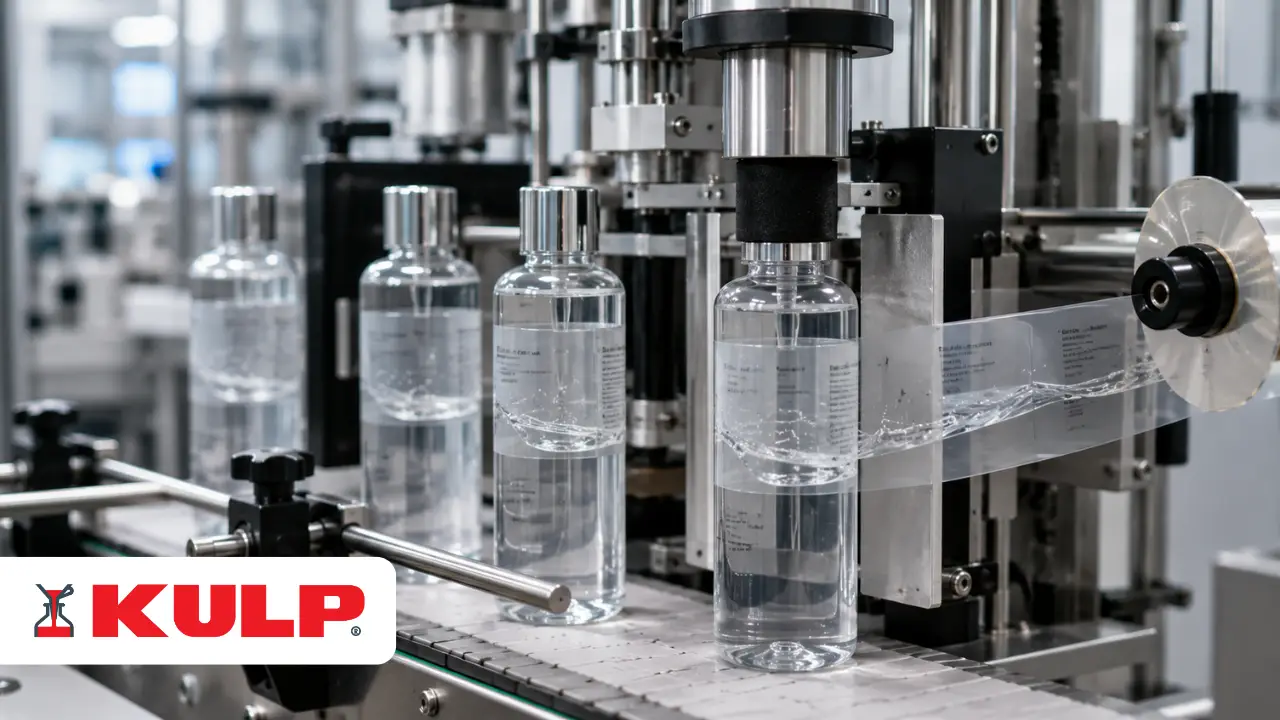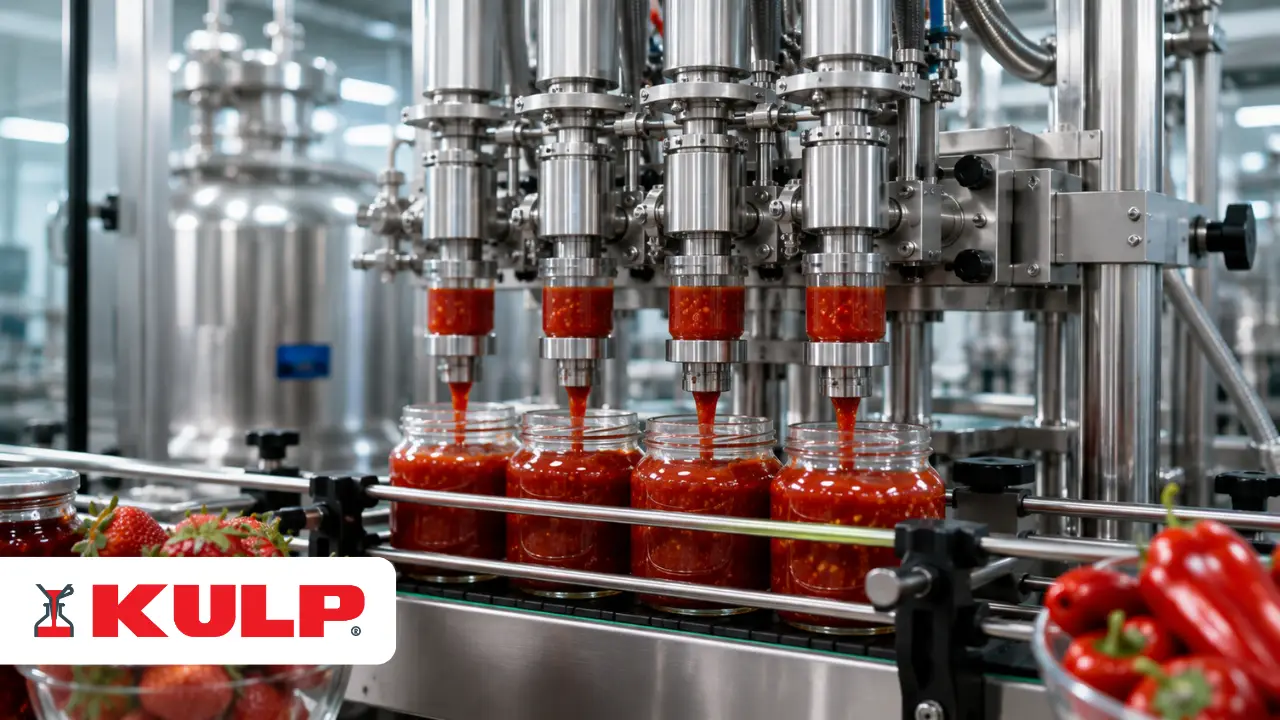
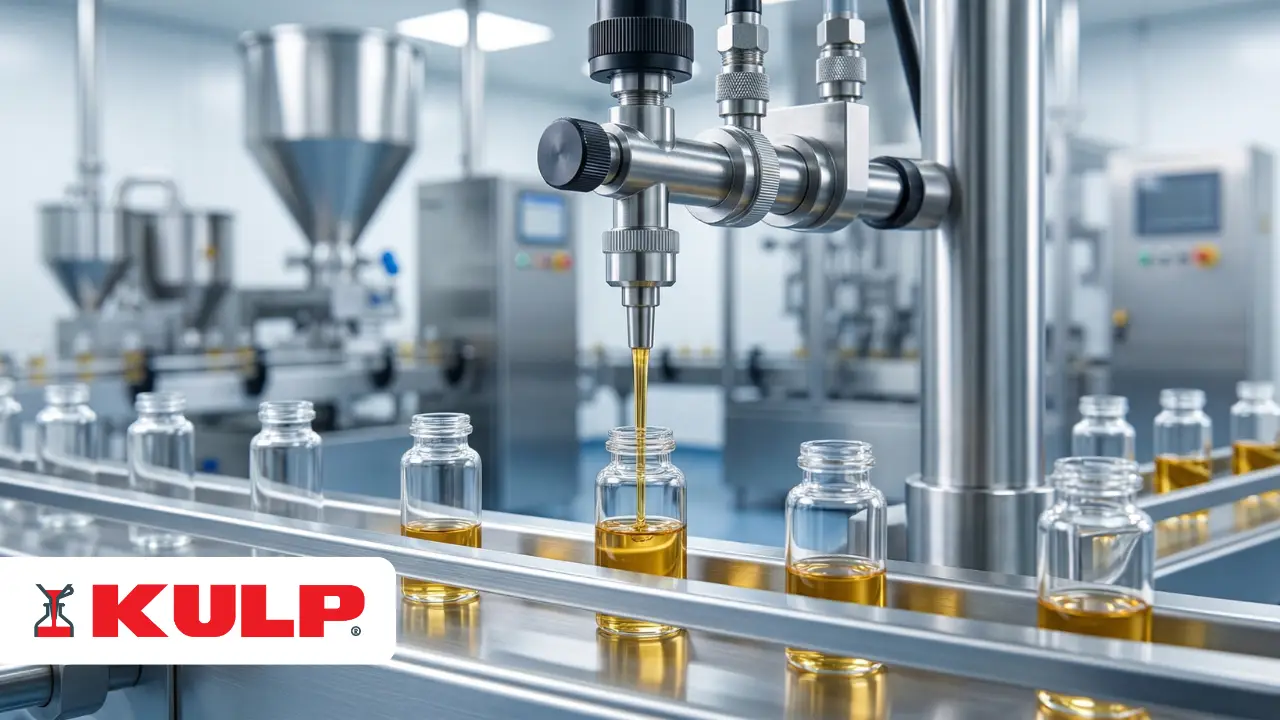
For any manufacturing facility producing cosmetics, perfumes, pharmaceuticals, or personal care products, sample sizes (testers) and travel miniatures are never just promotional items. They are the ultimate business card of your brand. When a consumer walks into a retail store, their very first interaction is testing that 2 ml perfume vial or that 5 ml luxury face cream. The filling quality inside that tiny container, its pristine appearance, and the flawless application of its cap directly dictate the consumer’s decision to purchase the full-sized, premium product.
At Kulp Machinery, with nearly 40 years of global industrial experience, we have engineered solutions for thousands of production floors. We profoundly understand the greatest operational nightmare manufacturers face when packaging samples: “We have tons of premium bulk product in our mixing tanks, yet we struggle to fill those tiny 5 ml tester bottles with acceptable precision.”
Through decades of field experience, we know that the true pain point for industrialists is volumetric deviation. When fill variations hit ±10% in miniature bottles, your highly expensive essential oils, luxury serums, and active pharmaceutical ingredients literally vanish into thin air. Inferior machines constantly drip, contaminating the exterior of the packaging, slowing down the capping process, and causing hundreds of bottles to be rejected every single shift.
In this comprehensive guide, we will dissect the complex engineering required to resolve these nightmares. We will explore how Kulp Machinery’s custom-tailored technologies guarantee zero-waste production and millimetric precision in small-dose packaging.
CHAPTER 1: The Engineering Challenges of Small Volume Filling
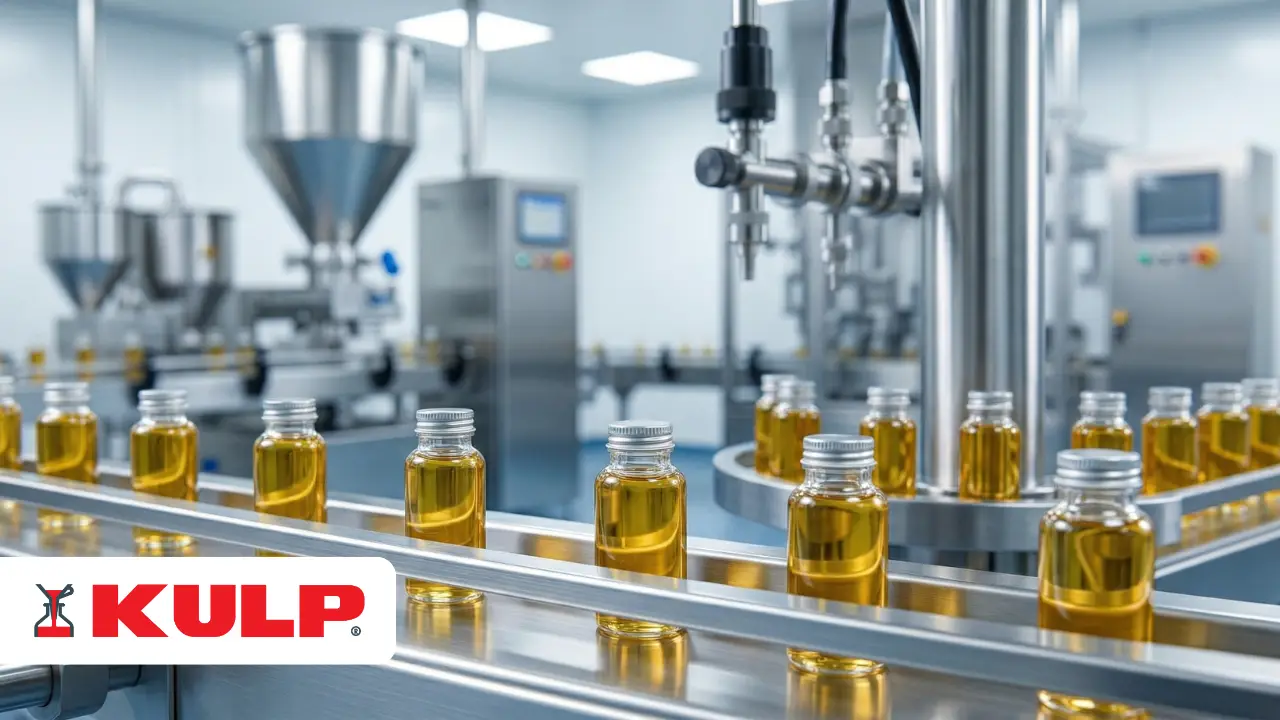
Filling a 1-liter bottle of shampoo or a 5-liter jug of motor oil is a relatively straightforward process once the viscosity is calculated. However, when the target volume drops to 2 ml, 5 ml, or 10 ml, the laws of physics and mechanical engineering principles change entirely.
1.1. The Battle of Precision (The ±0.1g Challenge)
The absolute foundation of sample filling is extreme accuracy. Suppose you are filling a standard 50 ml luxury face serum. A 1 ml deviation (±2%) is generally a tolerable margin in standard production. However, if you are filling a 2 ml perfume tester or a laboratory diagnostic vial, a 1 ml deviation represents a catastrophic ±50% error margin. This results in retail shelves where half the vials look empty and the other half are overflowing, instantly creating a perception of poor quality in the consumer’s mind.
Standard, budget-tier filling machines available in the market typically operate with a ±3% deviation. In sample volumes, this lack of calibration is unacceptable. At Kulp Machinery, our sample filling solutions utilize advanced servo-driven volumetric piston technology, operating at an astonishing accuracy of ±0.5% to ±1%. Depending on the product’s viscosity, we routinely achieve precision levels of ±0.1 grams. This guarantees a flawless, uniform appearance that elevates your brand’s premium identity.
1.2. Zero Waste and Cleanliness (The “No Drip” Challenge)
Perfume essences, luxury anti-aging serums, and active pharmaceutical compounds are premium raw materials, often more expensive per ounce than precious metals. If your filling nozzles drip even a fraction of a drop after each cycle, that leakage does not just soil the packaging; it flushes your profit margins directly down the industrial drain.
The most frequent complaint we hear from production managers is: “The nozzles drip, the threads get sticky, and my operators spend hours cleaning the bottles.” We permanently eradicate this issue with Kulp Machinery’s proprietary Anti-Drip Pneumatic Nozzle technology. The absolute millisecond the fill cycle completes, the internal mechanism reverses the air pressure, creating a rapid vacuum (suck-back effect) that pulls the product slightly up into the nozzle. The tip remains as clean as if severed by a blade, ensuring 100% prevention of dripping and product waste.
CHAPTER 2: Matching Nozzle Technology to Product Behavior
Sample filling is not solely a battle of volume; it is a mechanical war against the fluid dynamics (viscosity) of the product. Selecting the incorrect nozzle architecture is the silent flaw that can sink an entire packaging line.
2.1. Perfumes, Toners, and Alcoholic Liquids (Flowmeter and Time-Gravity Filling)
For highly fluid, water-like (Newtonian) liquids such as perfumes and toners, Flowmeter or Time-Gravity filling systems are exceptionally fast and highly economical. By utilizing specialized micro-nozzles designed to fit the narrowest vial necks, these systems achieve ±0.5% precision without generating excessive turbulence or aerating the alcohol base.
2.2. Cosmetic Creams, Dense Lotions, and Pharma Gels (Servo Piston Volumetric)
For viscous products like heavy face creams, petroleum jelly, or thick pastes, Volumetric Piston Systems are an absolute requirement. However, for sample-sized doses, the infinite control of a servo motor is mandatory. The specific nozzle selection plays a critical role here:
Foaming Products: If you are filling testers for shampoos or liquid detergents, we deploy Bottom-Up Filling (Diving Nozzle) technology. The nozzle dives to the very bottom of the tiny bottle and slowly rises synchronously with the liquid level, completely eliminating foam generation and overflow.
Solidifying/Clogging Products: When processing products that solidify at room temperature, such as heavy waxes, epoxies, or petroleum jelly, we utilize a Double-Jacketed Heated Hopper with an Integrated Agitator. The product is kept perfectly fluid and homogeneous right up until the moment it enters the filling cylinder. Furthermore, our specialized nozzles are equipped with pneumatic cutters to prevent the product from freezing and clogging the tip.
CHAPTER 3: Global ROI Analysis and European Manufacturing Standards
When executing a capital expenditure (CAPEX) for a sample filling machine, your Return on Investment (ROI) calculation must not focus on the cost of the empty vials, but rather on the cost of the raw material giveaway.
As Kulp Machinery engineers, we present the following ROI mathematics to our global partners:
Assume your facility fills 10,000 tester vials per day.
To avoid under-filling penalties using a low-quality machine, you deliberately overfill each vial by 1 ml (e.g., dispensing 3 ml instead of the target 2 ml).
10,000 vials x 1 ml = You are giving away 10 Liters of your highly expensive luxury essence for free every single day.
That equates to 260 liters a month, or over 3,100 liters annually. The sheer financial value of this wasted premium product will easily pay for Kulp Machinery’s servo-controlled, high-precision, zero-waste system within a few short months.
Furthermore, importing cheap machinery from unverified Far East suppliers carries a massive hidden cost. If a proprietary circuit board burns out, waiting three weeks for a replacement part to clear international customs means your production stops entirely. We stand behind every single bolt of the machinery we manufacture in our Istanbul facility. We exclusively integrate Universal Tier-1 components from global giants like Siemens, Festo, and Schneider. Should you ever need support, our remote access modules and global spare parts availability ensure your production line is rescued within hours, not weeks.
Frequently Asked Questions (Global Importer FAQ)
1. Can you genuinely achieve ±0.1g precision in a 2 ml tester vial? Yes. While the exact tolerance depends slightly on the product’s viscosity (whether it is a Newtonian fluid or a dense paste), our servo-driven volumetric pistons paired with micro-nozzles guarantee a standard accuracy of ±0.5%. In small sample volumes, this translates directly to a millimetric ±0.1 gram precision.
2. How do you prevent highly fluid perfumes from dripping out of the nozzle? Kulp Machinery’s patented Anti-Drip Pneumatic Nozzle utilizes a specialized internal valve. The millisecond the target weight is reached, the valve redirects pneumatic pressure to execute a rapid “suck-back” vacuum. This pulls the liquid droplet back inside the shaft, leaving the nozzle tip immaculately clean and ensuring zero contamination on your packaging.
3. Can I upgrade a semi-automatic sample filler to a fully automatic line in the future? Absolutely. Modularity is a core philosophy at Kulp Machinery. You can purchase a budget-friendly, tabletop semi-automatic sample filler today. Next year, as your contracts multiply, we can take that exact filling module and integrate it over a motorized conveyor belt with an automatic bottle unscrambler, capping station, and labeling module, transforming it into a fully automatic line.
4. How do you handle thick cosmetic creams that freeze or change viscosity in the hopper? When processing heavy ointments, face masks, or gels prone to solidifying, we equip the machine with a Double-Jacketed Heated Tank and Motorized Mixer. Thermal oil or water circulates through the double walls to heat the product indirectly, while the mixer ensures continuous homogenization. The product maintains its perfect fluid state right until it is injected into the vial.
5. My sample bottles vary greatly in height and width. Do I need a different machine for each? No. With our servo-driven volumetric pistons, adjusting the fill volume takes seconds via the digital HMI touchscreen. The operator simply types “2 ml” or “10 ml,” and the machine instantly calibrates its stroke length. Thanks to the smart recipe memory and tool-less mechanical adjustments, transitioning between completely different product formats is incredibly fast.
Do Not Leave Your Customer’s Tester Experience to Chance!
The modern consumer judges the efficacy of your premium perfume or luxury anti-aging cream the moment they hold that 2 ml tester. The volumetric precision inside that tiny glass vial, its pristine, spill-free appearance, and the flawless application of its cap directly influence their decision to invest in your full-sized product.
Take your product and your miniature bottles, and come to our headquarters in Istanbul. In our state-of-the-art demonstration center, we will run a live Virtual or In-Person Factory Acceptance Test (FAT) using your actual materials. Witness Kulp Machinery’s millimetric precision, zero-waste technology, and robust engineering with your own eyes. Make your global investment decision with absolute confidence. Do not leave your brand’s first impression to chance; entrust it to proven engineering.