In the cosmetics industry, packaging is no longer just a container that protects the product. It is a strong sales element that reflects brand quality, price positioning and consumer trust directly on the shelf.
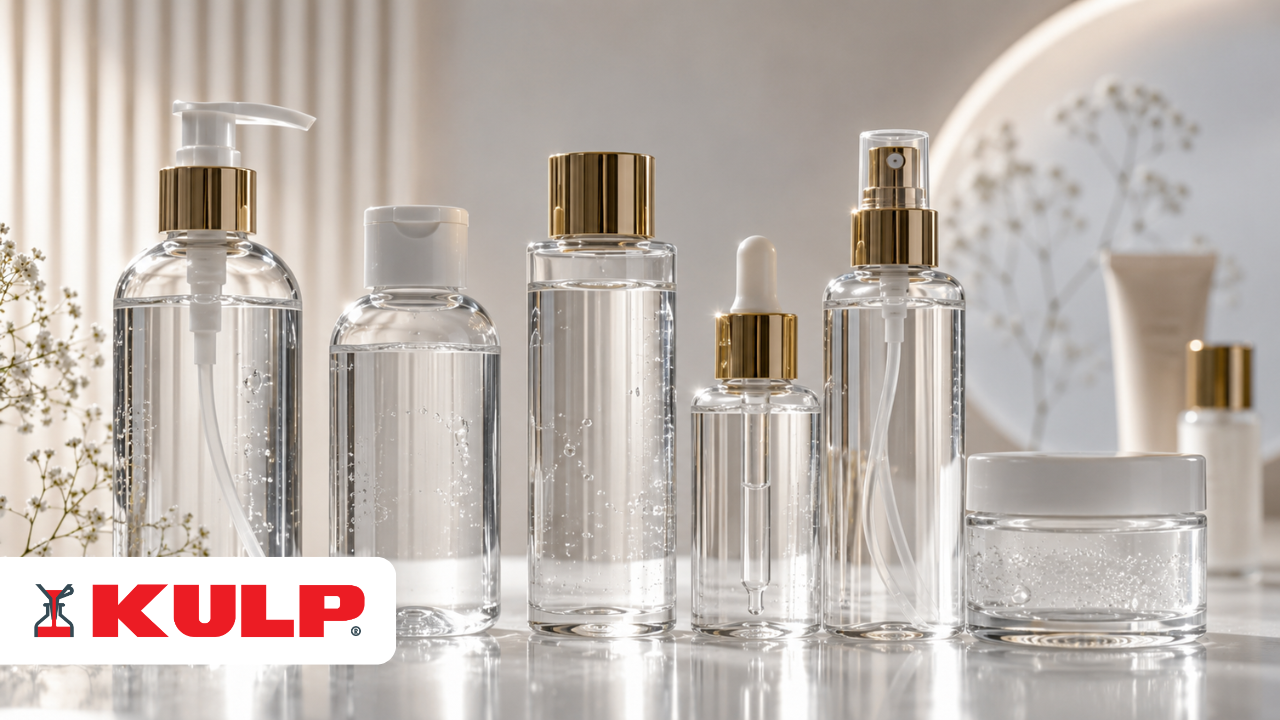
Transparent labels applied on transparent or semi-transparent bottles are increasingly preferred for shampoos, shower gels, serums, toners, lotions, body sprays, hair care oils, facial cleansers and liquid soaps. This technique gives the product a clean, modern and premium appearance.
In the industry, this effect is commonly known as no-label look. In other words, the label does not look like a separate sticker; it looks as if the print is directly applied to the bottle.
But there is a technical reality behind this premium look:
Transparent labels do not forgive mistakes.
On white or opaque labels, small air bubbles, surface defects or minor alignment issues may not be easily noticed. But on transparent labels, even the smallest bubble, wrinkle, dust particle, oil mark or edge lifting becomes immediately visible.
That is why choosing the right labeling machine is just as important as choosing the right label material in no-label look applications.
What Is Transparent Labeling?
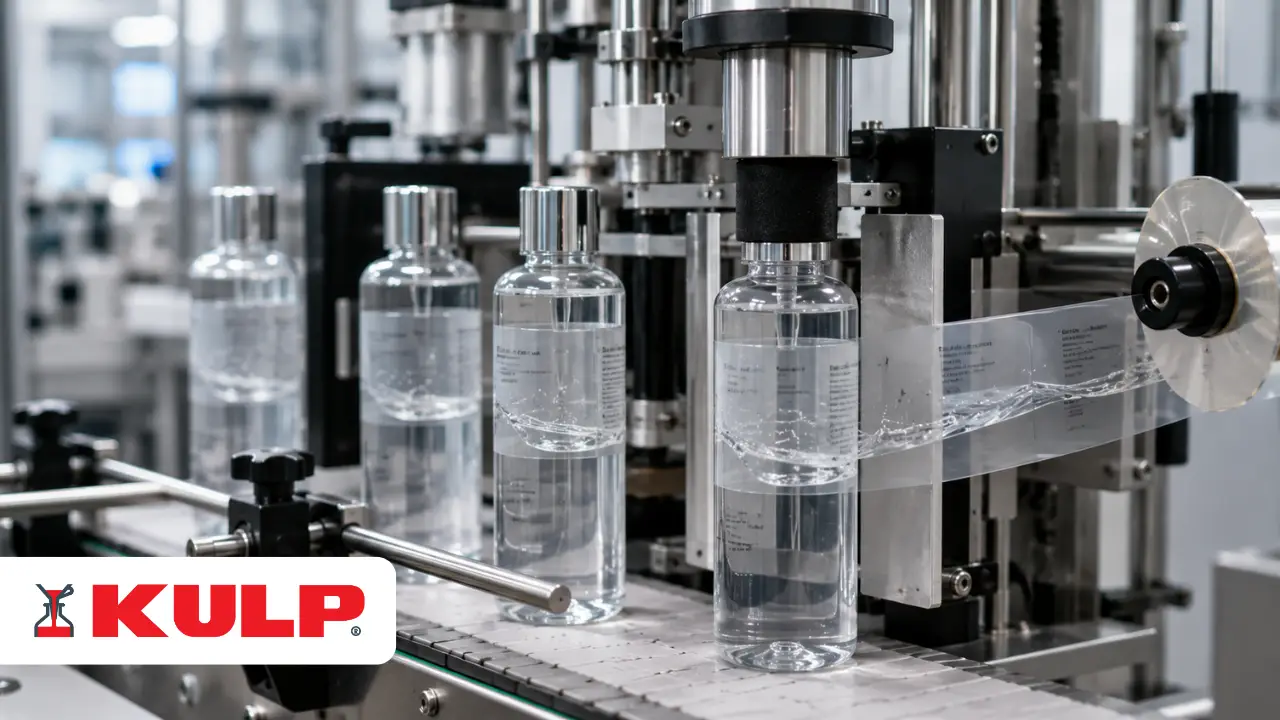
Transparent labeling is the application of clear film-based labels onto transparent or semi-transparent cosmetic packaging. The goal is to make the label almost invisible and create a clean, integrated packaging appearance.
Clear PP, PET, PE or BOPP-based label materials are commonly used in this application. Brand logo, product name, ingredients, barcode, usage instructions and legal information are printed on the label. Since the label base is transparent, the design appears integrated with the bottle.
Transparent labeling is especially preferred for:
- Shampoo bottles
- Shower gel packaging
- Liquid soap bottles
- Toner and micellar water bottles
- Serum and skincare packaging
- Hair care oil bottles
- Body spray and cologne bottles
- Lotion and cream bottles
- Premium cosmetic products
- Natural product series
No-label look gives the brand a cleaner and more premium shelf perception. However, for this appearance to be successful, the label must sit on the bottle almost perfectly.
Why Is No-Label Look So Popular in the Cosmetics Industry?
Cosmetic consumers make fast decisions based on packaging. Among hundreds of products on a shelf, clean, bright, simple and professional-looking packaging attracts attention more easily.
The main reasons why transparent labeling stands out in the cosmetics sector are:
- It gives the product a premium appearance
- It creates a cleaner and more modern packaging design
- It highlights the color of the product inside the bottle
- It makes brand design look more elegant
- It supports a natural, clean and minimalist perception
- It creates a stronger sense of quality on the shelf
- It works well with glass and transparent PET bottles
Transparent labels are especially effective for colored liquid products. For example, amber-colored hair oil, pink toner, green botanical shower gel or clear micellar water can achieve a more integrated look without the label visually interrupting the bottle.
But there is one important point:
A transparent label can make a product look premium, but it can also make mistakes look more visible.
If the application is poor, the result will not look premium. It may create an amateur packaging impression instead.
Common Problems in Transparent Label Applications
Transparent labeling is a sensitive process. The label shows every surface defect. If the labeling machine, bottle surface, label material or production environment is not suitable, the final result may fail to meet expectations.
The most common problems in transparent label applications are:
- Air bubbles
- Wrinkles
- Dust or particles under the label
- Edge lifting
- Misaligned label application
- Opening at the start or end point
- Wavy appearance on the bottle
- Silvering effect
- Visible adhesive marks
- Poor adaptation to bottle curves
- Sensor failure in detecting transparent labels correctly
These issues are not always caused only by label quality. Machine settings, product flow, bottle geometry and operator training also have a direct impact.
Why Do Bubbles Form Under Transparent Labels?
The main reason for air bubbles in transparent labeling is trapped air between the label and the bottle surface. If the label does not contact the surface in a controlled and even way, the air cannot escape and becomes visible under the label.
The main causes of bubble formation are:
- Dusty or oily bottle surface
- Label applied too quickly
- Incorrect pressure roller setting
- Wrong label contact angle
- Incorrect peel plate angle
- Curved or uneven bottle surface
- Label material not suitable for the packaging surface
- Temperature and humidity affecting adhesion
- Poor label roll tension balance
- Machine speed set too high for the bottle geometry
For bubble-free application, the goal is not simply to stick the label onto the bottle. The important point is how the label contacts the bottle: at what angle, at what speed, with what pressure and on what surface condition.
First Criterion: Bottle Surface Must Be Clean, Dry and Stable
In no-label look labeling, the first point to check is the bottle surface. Transparent labels reveal everything on the surface.
In cosmetics production lines, bottles may sometimes come into contact with dust, moisture, oil, silicone-based residue, product vapor or handling marks before or after filling. Especially in oil-based cosmetic products, a very thin slippery layer may form on the bottle surface.
This directly affects label performance.
If the bottle surface is not suitable, the following problems may occur:
- Weak label adhesion
- Edge lifting
- Increased air bubbles
- Stained appearance under the label
- Poor integration between label and bottle
- Label deformation during shelf life
That is why the bottle surface must be clean, dry and stable before labeling. If necessary, air blowing, surface cleaning or correct line layout should be used to prepare the package surface for labeling.
Second Criterion: Transparent Label Material Must Be Selected Correctly
The quality of the transparent label directly affects the application result. Not every transparent label is suitable for every bottle.
Cosmetic bottles can be made from PET, PE, PP, glass or different plastic structures. The label material must be selected according to the bottle surface and product usage conditions.
For example, shower gel or shampoo bottles may be used in humid bathroom environments. Hair care oil bottles may be exposed to oily surface contact. Toner or cologne products may contain alcohol-based formulas that can affect the packaging surface.
When selecting label material, the following details should be evaluated:
- Transparency level of the label
- Adhesive type
- Compatibility with packaging surface
- Moisture resistance
- Oil and chemical resistance
- Compatibility with bottle flexibility
- Label thickness
- Roll quality
- Liner structure
- Compatibility with printing technique
For a successful no-label look, a transparent film alone is not enough. The adhesive must also be clear, balanced and suitable for leaving a clean appearance on the surface.
Third Criterion: Transparent Label Sensor Must Be Suitable
One of the most critical technical issues in transparent labeling machines is the label detection system. Standard label sensors may work well with opaque or white labels because the difference between the label and liner is easier to detect.
Transparent labels are different. The label is transparent, and the liner may also allow some light transmission. This means a standard sensor may fail to detect the gap between labels correctly.
This can lead to problems such as:
- Label released at the wrong time
- Label position shifting
- Misalignment on the bottle
- Changing label start point
- Different label positions in serial production
- Frequent operator adjustments
Transparent labels may require special sensor solutions, ultrasonic label sensors or systems designed specifically for clear label detection.
This detail must be discussed before purchasing a machine. A machine may be listed as a “labeling machine” in a catalog, but that does not mean it will perform well with transparent labels.
Fourth Criterion: Peel Plate Angle and Label Dispensing Point
In a labeling machine, the point where the label separates from the backing liner is usually the peel plate or label dispensing edge. This part ensures that the label is delivered to the bottle at the correct angle and timing.
This point is very sensitive in transparent labeling. If the label contacts the bottle too early, alignment may fail. If it contacts too late, the label may not sit properly on the surface. If it contacts at the wrong angle, trapped air and wrinkles may increase.
The peel plate angle should be adjusted according to:
- Bottle diameter
- Bottle shape
- Label length
- Label thickness
- Machine speed
- Application direction
- Packaging surface
- Target label position on the bottle
This adjustment may seem small, but it can make a major difference in transparent label quality.
Fifth Criterion: Pressure Roller and Application Pressure Must Be Balanced
In transparent label application, the pressure roller, brush or application pad must apply the label to the bottle with the correct pressure.
If pressure is too low, the label will not fully adhere to the surface and bubbles may form. If pressure is too high, the label may stretch, wrinkle or create a wavy appearance on the bottle. This is especially important for thin film labels.
A correct pressure system helps:
- Push air out from under the label
- Spread the label evenly over the surface
- Reduce edge lifting risk
- Support wrinkle-free application
- Improve the clarity of the transparent look
- Increase positional consistency in serial production
Round bottles, oval bottles and flat-surface bottles may require different application systems. This means the labeling machine must be configured according to the bottle shape.
Application Differences on Round, Oval and Square Bottles
The cosmetics industry uses a wide variety of packaging shapes. Round shampoo bottles, oval shower gel bottles, square toner bottles, cylindrical serum bottles, conical lotion bottles and custom flat-surface bottles do not behave the same way during labeling.
Transparent Labeling on Round Bottles
On round bottles, labels are usually applied with a wraparound system. The bottle rotates while the label is applied to the surface. Rotation speed, label dispensing speed and pressure roller synchronization are very important.
If bottle rotation and label dispensing speed are not synchronized, the label may shift, stretch or fail to close neatly at the start and end point.
Transparent Labeling on Oval Bottles
Oval bottles are more sensitive. The surface may start flat and then transition into a curve. The label must adapt to these shape changes.
If the orientation system, product fixing and pressure application are not properly planned, the label may sit well on one section but create bubbles or wrinkles on another.
Transparent Labeling on Square and Flat-Surface Bottles
On square bottles, the label is usually applied to a flat surface. The most important point here is correct bottle positioning on the machine. If the bottle arrives at a slight angle, the label will look crooked.
In no-label look applications, misalignment becomes very visible. Because the transparent label blends into the packaging, alignment errors can look like design errors.
Why Are Label Tension and Roll Quality Important?
Roll tension directly affects labeling quality. If the label roll works with too much tension, the film may stretch. If tension is too low, label dispensing may become unstable.
This is even more sensitive with transparent film labels. Film materials behave differently from paper labels. They can stretch, be affected by static electricity and create waviness during application.
Roll quality is also important. Winding errors, damaged edges, roll deformation or liner issues can reduce application quality even if the machine itself is well designed.
That is why a transparent labeling line should evaluate not only the machine but also the quality of the label supply.
Static Electricity, Dust and Environmental Conditions
Transparent labels can be affected by static electricity. Static charge may cause the label to approach the surface differently than expected or attract dust particles.
This becomes more noticeable in dry environments, high-speed lines and film-based labels.
Dust and particles are among the biggest enemies of no-label look packaging. Even a tiny dust particle trapped under a transparent label can become visible on the surface.
Important environmental conditions include:
- Dust control in the production area
- No particles on bottle surfaces
- Clean storage of label rolls
- Balanced humidity and temperature
- Evaluation of static electricity risk
- Protection of packaging from contamination before labeling
If you want a premium packaging appearance, the environment around the labeling line must also be managed with premium discipline.
Should Labeling Be Done Before or After Filling?
In cosmetics production, whether labeling should be done before or after filling depends on the product and packaging structure.
In some cases, labeling empty bottles may be easier. The bottle may be cleaner and free from product residue. However, some thin plastic bottles may not maintain their form properly when empty.
A filled bottle may be more stable, but if product contamination occurs during filling, labeling quality can decrease.
The following questions should be evaluated:
- Does product spill or contaminate the outer surface during filling?
- Is the product oily, alcoholic or slippery?
- Does the empty bottle maintain its shape?
- Does capping affect the bottle surface?
- Is label position affected by filling or capping operations?
- Which line layout provides better production flow?
For manufacturers like Kulp Makine with line installation experience, this decision is not only about labeling machine selection. It is about planning the entire production flow correctly.
Front and Back Label Application on Cosmetic Bottles
Many cosmetic products use the front label for brand and product name, while the back label includes ingredients, usage instructions, barcode and legal information. That is why front-back labeling is common in the cosmetics industry.
With transparent labels, front and back alignment is very important. Even a few millimeters of shift can make the product look unprofessional on the shelf.
For front-back labeling, the following details are important:
- Bottle orientation system
- Sensor sensitivity
- Label dispensing timing
- Synchronization of front and back label rolls
- Product fixing suitable for bottle shape
- Easy operator adjustment
- Repeatable label positioning in serial production
For cosmetics manufacturers, these details are not only about visual quality. They are part of brand standards and shelf consistency.
Printing Quality and White Ink Detail in No-Label Look
Printing quality is very important in transparent labels. Since the label base is clear, the way colors appear on the bottle must be planned carefully.
In some designs, white ink is used as an underprint. This helps colors appear more clearly. Otherwise, light-colored text or logos may blend with the color of the product inside the bottle.
For example, if a transparent bottle contains a yellow-toned product, light-colored design elements on a transparent label may not be readable enough. In this case, design, printing and label material must be evaluated together.
On the machine side, the printed label must be positioned correctly on the bottle. Even if the design is excellent, a crooked or bubbled application damages brand perception.
Does Higher Speed Increase Risk?
Speed is an important criterion in labeling machines. However, in no-label look applications, speed alone is not the measure of success.
In transparent labeling, working at very high speeds may increase the risk of bubbles, wrinkles or position deviation on certain bottles. That is why machine speed should be optimized according to the product, bottle and label structure.
In industrial production, the real question is not only “How many labels per minute can the machine apply?”
The real question is:
How many products per minute can it label cleanly, accurately, without bubbles and at acceptable quality?
For production managers, this is the real capacity. Because incorrectly labeled products mean rework, waste and lost time.
What Should Be Considered When Buying a Transparent Labeling Machine?
When purchasing a transparent labeling machine for cosmetics production, price or catalog speed should not be the only criteria. The machine must be compatible with your bottle, label, product and production target.
The following criteria must be evaluated before purchasing:
Compatibility with Bottle Shape
Round, oval, flat, square or conical bottles may require different labeling solutions. The machine must be configured according to the packaging geometry.
Transparent Label Sensor
A suitable sensor system must be used for transparent labels. Standard sensors may not be sufficient in some applications.
Label Application Pressure
The pressure roller, brush or wraparound system must apply the label evenly to the surface. Incorrect pressure can create bubbles or wrinkles.
Roll Tension Control
Film label tension must be adjusted precisely. Tension errors can cause stretching or unstable positioning.
Easy Operator Adjustment
Cosmetics manufacturers often change products and packaging formats. Therefore, machine adjustments should be practical and operator-friendly.
Service and Spare Part Support
When the labeling line stops, packaging and shipment also stop. Fast service and spare part availability are critical purchasing factors.
Typical Problems in Standard Far East-Origin Machines
Transparent labeling is a sensitive application. That is why standard low-cost machines do not always deliver the expected result in cosmetic production.
Some imported machines may create problems such as:
- Sensors that cannot detect transparent labels properly
- Alignment problems on oval bottles
- Unstable tension with film labels
- Bubble formation in no-label look applications
- Long spare part waiting times
- Electronic board or software support issues
- No possibility of product-specific revision
- Insufficient operator training
A machine that looks affordable at first may become more expensive through waste and downtime in real production.
In sensitive processes like transparent labeling, testing the machine with your actual packaging and revising it according to your bottle shape provides a major advantage.
How Does Kulp Makine Provide Transparent Labeling Solutions?
Kulp Makine is not only a filling machine manufacturer for the cosmetics industry. It also develops packaging and labeling solutions according to the manufacturer’s production needs.
For transparent labeling, the product and packaging are evaluated together:
- Is the bottle round, oval or square?
- Is the label single-side or front-back?
- Is the label a transparent film?
- Is the packaging glass, PET or PE?
- Will the bottle be labeled empty or full?
- What is the daily production target?
- How often will product changes be made?
- Will the line be manual, semi-automatic or fully automatic?
After this analysis, the correct labeling system is determined.
Kulp Makine’s transparent labeling solutions offer:
- Machine configuration according to bottle shape
- Sensor options suitable for transparent label applications
- Precise label positioning
- Application systems that reduce bubble and wrinkle risk
- Front-back labeling solutions
- Line integration suitable for cosmetic packaging
- Local manufacturing advantage in Türkiye
- Service and spare part support
- Testing with product and packaging samples
For Kulp Makine, the right labeling machine is not only a machine that sticks a label. The right machine protects your shelf appearance, reduces waste, supports the operator and works without interrupting production.
Frequently Asked Questions
What is no-label look labeling?
No-label look labeling is the application of transparent film labels onto transparent or semi-transparent packaging to create an almost label-free appearance. Since the label blends with the package, the product looks cleaner and more premium.
Why do bubbles appear under transparent labels?
Bubbles usually appear when air is trapped between the label and the bottle surface. Dirty surfaces, incorrect pressure, excessive speed, unsuitable label material or incorrect peel angle can increase bubble risk.
Is a special sensor required for transparent labels?
In many applications, yes. Standard sensors may not detect the gap between transparent labels clearly. Special sensor systems suitable for transparent label detection may be required.
Can transparent labels be applied to oval cosmetic bottles?
Yes. However, oval bottles require more careful orientation, fixing and pressure application. Otherwise, the label may sit correctly on one section but create bubbles or wrinkles on another.
Should labeling be done before or after filling?
This depends on the product and packaging. Empty bottles may be cleaner, but some bottles may not keep their form when empty. Filled bottles may be more stable, but if product contaminates the surface during filling, label quality may decrease.
Is speed important in transparent labeling machines?
Yes, but speed is not the only criterion. What matters is how many products per minute can be labeled cleanly, accurately, aligned and bubble-free. If the defect rate is high, catalog speed does not create real production value.
Can Kulp Makine test labeling with packaging samples?
Yes. For the most accurate machine selection, testing with bottle and label samples is recommended. Kulp Makine evaluates packaging form, label material and production target to determine the right labeling solution.
Conclusion: Transparent Labeling Requires Precise Machine Adjustment
No-label look labeling creates a powerful shelf effect in cosmetic packaging. It makes the product look cleaner, more modern and more premium. However, this appearance is successful only when the label is applied cleanly, accurately, without bubbles and without wrinkles.
This is possible not only with high-quality label material, but also with the right machine design, suitable sensor, balanced pressure, correct peel plate angle, stable roll tension and bottle-specific settings.
In the cosmetics industry, brand perception starts with packaging. Even a small bubble on the bottle can affect quality perception on the shelf.
Kulp Makine offers product- and packaging-specific machine solutions for transparent labeling, front-back labeling and no-label look applications in the cosmetics industry.
Bring your bottle and label sample to our factory. Let’s test the no-label look application with your real packaging in our demo center. See whether there are bubbles, whether alignment is correct and whether the shelf appearance is strong. Make your decision by seeing the real result with your own eyes.