Walking across the factory floor, the sounds you hear tell you much more about the financial health of your manufacturing business than the spreadsheets on your desk. The rhythmic, uninterrupted mechanical hum of a synchronized packaging line is the melody of profitability. Conversely, the erratic noises of a line that frequently stops, slows down due to operator fatigue, or requires constant manual adjustment serve as a loud alarm for hidden financial losses.
As a mechanical engineer and a manufacturing strategist who has dedicated years to optimizing production lines globally, the crossroads I most frequently encounter in meetings with international industrialists is always the same: “Should I continue my operations with a semi-automatic machine, or is it the right time to make the capital expenditure (CAPEX) for a fully automatic line?”
For an international buyer looking to import machinery, this question does not have a simple, one-size-fits-all answer. The decision must be rooted entirely in the mathematics of your specific facility, your local labor costs, and your multi-year growth projections. In the industrial sector, investments made based on hearsay or superficial price comparisons often turn into dead capital—machinery covered under a tarp in the corner of your facility, unable to meet your production needs.
“When you invest in industrial equipment, you are not purchasing stainless steel, pneumatic cylinders, or servo motors; you are purchasing future production capacity, reliability, and the power to fulfill your global supply chain commitments on time.”
Let us strip away the marketing jargon. With the precision of an engineer and the strategic mindset required for global manufacturing, we will dissect these two distinct technologies. We will examine step-by-step how to determine the most accurate, profitable, and fastest-depreciating investment for your facility through real-world Return on Investment (ROI) and Total Cost of Ownership (TCO) analyses.
The Reality of Production Capacity and the Human Factor
Before making any machinery investment, the very first metric you must be brutally honest about is your net daily, weekly, and monthly production volume. There is a massive discrepancy between claiming “we can run 10,000 bottles a day” and actually having 10,000 fully compliant, perfectly sealed, and labeled bottles sitting on a pallet ready for international freight by the end of the shift.
Semi-automatic machines, by their very definition, are systems that rely on the machine for half of the production cycle and human intervention for the other half. The operator places the empty container under the filling nozzle, presses a foot pedal or push-button, and the machine dispenses the pre-set volume of the product (whether it is heavy honey, highly viscous cosmetic lotion, or foaming chemical detergent). Once the cycle is complete, the operator manually removes the filled bottle and stages the next one. Subsequent processes like capping, torquing, and labeling are also typically handled manually or via separate, stand-alone stations.
The greatest advantage of this semi-automatic ecosystem is operational flexibility combined with a low initial capital investment. If you are operating a boutique manufacturing facility or acting as a contract manufacturer (co-packer) with high product variance, this is ideal. For example, if you need to fill 500 units of a specialized face cream into 50 ml glass jars in the morning, and then switch to filling 1,000 units of body wash into 250 ml PET bottles in the afternoon, format changeovers on a semi-automatic machine take only a few minutes. There are no complex PLC parameter adjustments or long conveyor synchronization tasks involved.
However, the flip side of this equation is bound to the undeniable limits of “human nature.” When an operator begins their shift at 08:00 AM, they might easily achieve a pace of 800 bottles per hour. By 03:00 PM, due to physical fatigue, repetitive strain, and natural drops in concentration, that output might plummet to 400 bottles per hour. Furthermore, human labor involves sick days, annual leave, breaks, and turnover. Your entire production schedule becomes entirely dependent on the physical stamina and daily mood of your workforce. For manufacturers in regions like North America, Europe, or the UK—where hourly labor costs are exceptionally high—this reliance on manual labor is an immense financial liability.
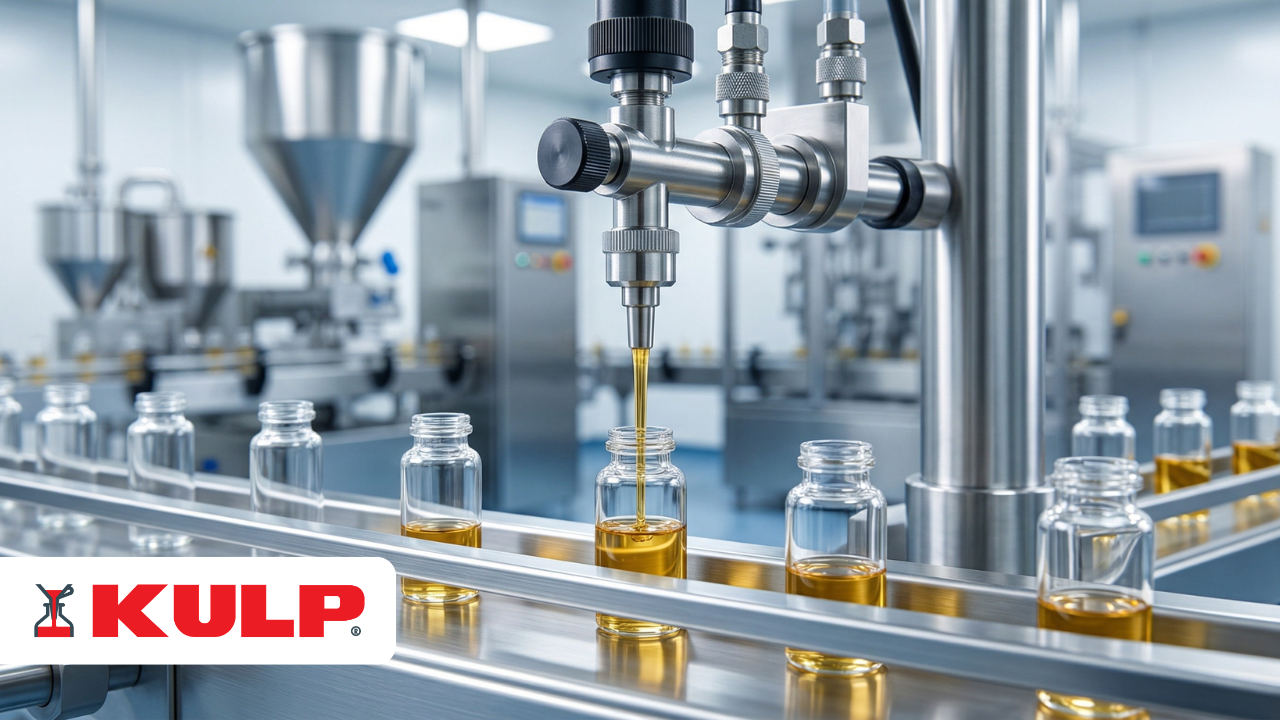
Fully automatic filling lines remove human-induced variability, fatigue, and inconsistency from the equation. Empty containers enter the system via an unscrambler or a motorized feeding table. Optical sensors detect the bottles in real-time, and pneumatic or servo-driven nozzles execute the filling process without human hands ever touching the product. The bottles then travel seamlessly down the conveyor into an automatic capping station where caps are sorted, placed, and tightened to the exact required torque, followed by precision labeling.
“In a fully automated production line, the operator is no longer a manual laborer; they are the manager of the line. Their responsibility shifts from carrying bottles with muscle power to supplying consumables and monitoring quality metrics via the HMI touchscreen.”
If your consistent daily production target reliably exceeds 3,000 to 5,000 units, and you do not require hourly packaging format changes, transitioning to a fully automatic line is no longer a luxury—it is a mandatory step for your business to remain globally competitive.
Initial Investment (CAPEX) vs. Total Cost of Ownership (TCO) in Global Markets
The most common trap business owners fall into when finalizing an investment decision is fixating solely on the “Total Price” at the bottom of the quotation. A semi-automatic filling machine might cost a fraction of a fully automatic, customized production line. At first glance, your accounting department will naturally favor the semi-automatic route. However, in industrial engineering, the true calculation is never based merely on the purchase price; it is based on the money the machine generates for you versus the money it bleeds from your operations. This is known as the Total Cost of Ownership (TCO).
Let us break this down with a concrete, real-world manufacturing scenario. Assume you are producing a medium-viscosity liquid soap and you need to output 10,000 bottles per day to meet your distributor demands.
The Semi-Automatic Scenario: To fill 10,000 bottles daily using semi-automatic equipment—factoring in the realistic limits of human speed—you will likely need to purchase at least 3 separate semi-automatic filling machines. You will need 3 operators to run those fillers, another 3 personnel to manually place and tighten the caps, and at least 3 more workers for labeling and end-of-line carton packing. You have just built a labor force of 9 people strictly for this one product line. While the machines themselves were inexpensive to import, the monthly financial burden of 9 salaries, insurance premiums, healthcare benefits, and workplace safety liabilities will heavily tax your operational budget. Moreover, managing 9 individuals to work in perfect synchronization is a logistical nightmare for your production manager.
The Fully Automatic Scenario: You can seamlessly fill those exact same 10,000 bottles using a Kulp Machinery fully automatic line, equipped with smart sensors and a “No Bottle – No Fill” PLC logic, utilizing only 1 (or maximum 2) supervisory operators. Yes, the initial capital expenditure (CAPEX) will be significantly higher. You will have to pay more upfront and account for international shipping of a larger system. However, every single month, you will save the comprehensive labor costs of 7 to 8 employees.
When you calculate the fully burdened cost of labor in Western markets, combined with the drastic reduction in human error and workplace accidents, that fully automatic line will typically pay for itself purely through labor savings within 12 to 18 months. After that 18-month mark, the automated line transforms into a tireless, highly loyal employee that directly prints profit into your company’s accounts without ever asking for a raise.
The Hidden Enemy: Product Give-Away and Weight Discrepancies
In ROI analyses, the most frequently overlooked factor—yet the one that burns the biggest hole in a manufacturer’s pocket—is filling accuracy. Whether your product is organic honey, a premium cosmetic serum, or a highly concentrated agrochemical, every gram counts.
In semi-automatic and manual systems, especially those imported from low-cost Far East suppliers utilizing uncalibrated pneumatic cylinders, filling accuracy fluctuates wildly. Variables such as how long the operator depresses the pedal, compressor pressure drops, or the machine heating up throughout the day drastically alter the fill volumes. To avoid consumer complaints, regulatory fines from weight and measures authorities, and retailer rejections, production managers usually issue a standard directive: “Overfill it slightly, just to be safe.”
Suppose you are packaging 500 grams of premium peanut butter or preserves. On a low-quality semi-automatic machine, the weight fluctuation is around ±10 grams. To stay compliant, you calibrate the machine to fill 510 grams. That means you are giving away 10 grams of your valuable product for free in every single jar. At a production rate of 5,000 jars a day, you are losing 50 Kilograms of product daily. That equates to 1.5 tons a month, or 18 tons a year, of product shipped out the door completely unbilled. The raw material cost of those 18 tons of given-away product would easily have paid for a top-tier, servo-driven fully automatic line.
“A high-quality, precision filling machine is not an expense item on your balance sheet; it is a cash-generating financial instrument that actively prevents product waste and protects your raw material investments.”
At Kulp Machinery, our servo-motor controlled fully automatic volumetric lines guarantee an accuracy of ±0.5% (five per thousand). For a 500-gram fill, the maximum deviation is a mere 1 to 2 grams. The line frequently amortizes itself within the first year solely from this extreme reduction in product give-away. When drafting your procurement spreadsheets, you must include the “free product waste” metric.
Modular Growth: The Custom-Tailored Engineering Approach
What if your business does not currently possess the volume to justify a fully automatic line, but your 3-year business plan projects hitting those numbers? Should you delay automation entirely? Absolutely not. We understand how critical cash flow is for growing global enterprises. This is exactly where Kulp Machinery’s “Modular Design” philosophy provides an unparalleled advantage.
If you purchase a generic semi-automatic machine from an unreliable source, the moment your capacity outgrows it, that machine becomes obsolete scrap. You push it into a warehouse and have to buy a completely new line. Our engineering approach is vastly different. The semi-automatic filling units we design are built with a forward-looking infrastructure.
You can begin production today by purchasing a budget-friendly tabletop or stand-alone semi-automatic filling unit. Let’s say your export business booms, your orders double, and manual capacity is no longer sufficient. You do not need to throw your machine away or sell it at a massive loss. You simply contact us. We take the core volumetric filling module of your existing Kulp machine, integrate it over a custom-built stainless steel conveyor belt, equip it with optical sensors, and attach automatic capping and labeling modules. We transform your starter machine into a fully automatic industrial line.
This modular strategy allows international SMEs to scale their operations step-by-step, entirely risk-free. You only tie up your capital in the exact level of technology you need today, with the absolute assurance that you can “upgrade” your infrastructure tomorrow without losing your initial investment.
Maintenance, Downtime, and Global Spare Parts Availability
Whether semi-automatic or fully automatic, a machine only makes you money while it is running. Every minute it stands still, it is actively draining your resources.
The true, devastating cost of machines imported from the Far East with “unbelievably cheap” price tags reveals itself during the very first breakdown. When an obscure PLC screen burns out or a proprietary piston seal degrades, you will find no local support. Waiting 3 to 4 weeks for a replacement part to clear customs from Asia means that specific production line is dead for a month. You miss delivery deadlines, face severe financial penalties from major retail chains, and permanently lose customer trust.
“The best machine in the world is not the one that never breaks down, because every mechanical system eventually requires maintenance. The best machine is the one that can return to full production in the shortest possible time when a breakdown occurs.”
As Kulp Machinery, we merge our highly competitive manufacturing environment in Istanbul with strict European engineering standards. Whether you buy a simple semi-automatic filler or a complex 6-head automatic line, we strictly utilize Universal Components. Our pneumatic systems are Festo (Germany) or SMC (Japan). Our electronics and PLCs are Siemens, Schneider, or Delta. Our sensors are Sick or Omron.
This means if a sensor fails in a factory in Texas, Sydney, or London, you do not need to wait for us to ship a part from Turkey. You can drive to your local industrial supplier, purchase the exact same Sick sensor off the shelf, and have your line running in hours. Furthermore, our fully automatic lines feature Remote PLC Access. Via a secure internet connection, our engineers in Istanbul can log into your machine’s brain anywhere in the world to diagnose faults, tweak parameters, or push software updates. We export absolute maintainability.
The Decision Matrix for International Manufacturers
To summarize your investment roadmap:
If your daily production is between 1,000 and 3,000 units, you switch between multiple different bottle shapes and products throughout the day, operational flexibility is more critical than raw speed, and your CAPEX budget is limited, then Semi-Automatic Filling Machines are the correct starting point.
If your daily output consistently exceeds 5,000 units, and your primary goals are standardization, strict hygiene (untouched by human hands), drastic reductions in high local labor costs, and zero product waste, then transitioning to Fully Automatic Filling Lines is a commercial necessity, even if it requires securing financing.
Remember, while your international competitors are embracing automation to lower their unit costs, persisting with manual, muscle-powered systems will inevitably lead to a loss of your global market share.
Frequently Asked Questions (Global FAQ)
1. Can I fill different products on the same semi-automatic machine? Absolutely. Our machines are designed with “Tri-Clamp” sanitary fittings. Without using any wrenches or tools, the entire product contact pathway can be dismantled, cleaned, and reassembled in 10-15 minutes. You can fill thick shampoo in the morning, run a quick CIP (Cleaning in Place) cycle, and seamlessly switch to filling liquid hand soap in the afternoon.
2. Is the format changeover (switching bottle sizes) difficult on a fully automatic line? On older legacy machines, this took hours. However, in Kulp Machinery’s next-generation designs, we utilize numbered adjustment cranks, quick-release rails, and smart PLC memory recipes. Switching from a 250 ml bottle to a 1-liter bottle involves the operator turning a few hand-wheels to the recorded numbers and selecting the new recipe on the touchscreen. A complete format changeover typically takes between 15 to 30 minutes.
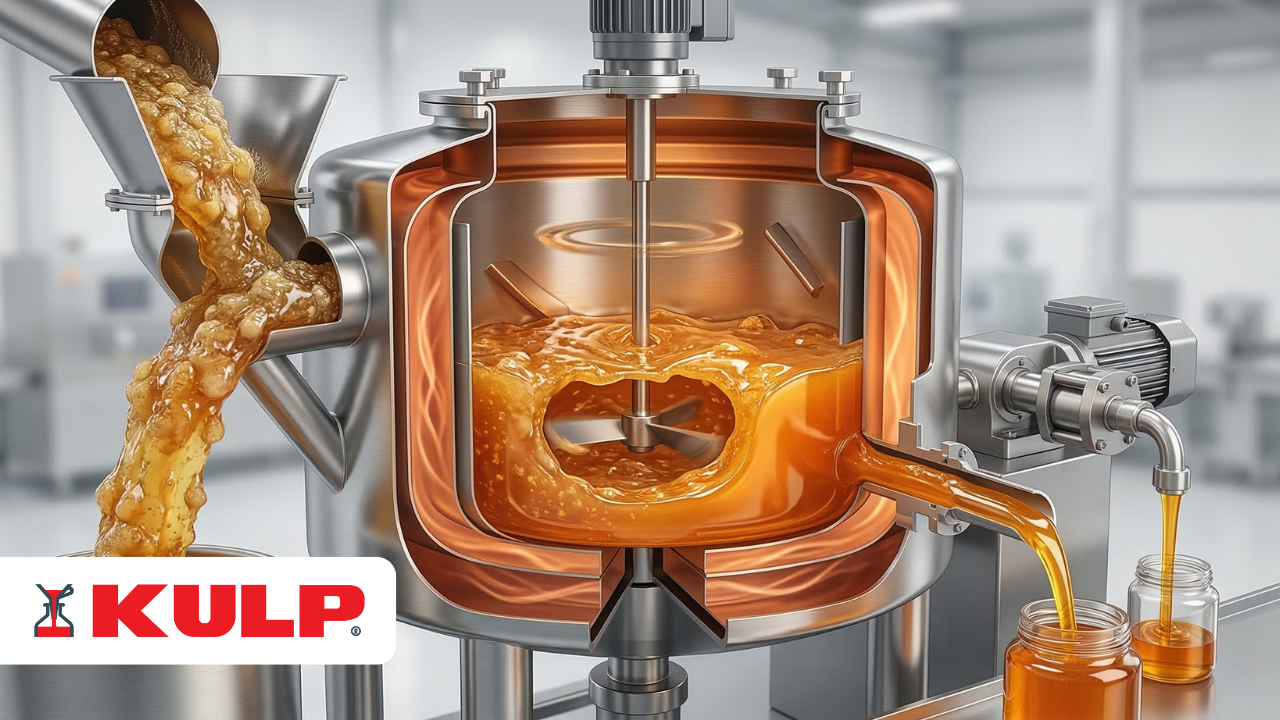
3. Do fully automatic lines struggle with highly viscous (thick) products? Not if the correct technology is engineered from the start. For highly viscous products like honey, peanut butter, or heavy industrial grease, we abandon standard pneumatic cylinders and equip the filling stations with high-torque Servo Motors. We also integrate double-jacketed heated hoppers with motorized agitators to maintain product flowability. Regardless of the density, precision is never compromised.
4. Can I upgrade my Kulp semi-automatic machine to a fully automatic line in the future? Yes. Over 90% of our semi-automatic volumetric units are built with a modular infrastructure. During the initial consultation, if you share your long-term growth projections, our engineers will recommend the specific model that can easily be integrated onto a motorized conveyor belt and synchronized with an automated PLC cabinet when you are ready to expand.
5. How do you handle installation and warranty for international clients? Every Kulp Machinery product is backed by a comprehensive 2-Year International Warranty against manufacturing defects, alongside a 10-year guarantee for spare parts availability. Because we use globally recognized brands (Festo, Siemens, etc.), parts are universally accessible. For installation, our machines are largely plug-and-play. However, for complex automatic lines, we offer full remote installation support via live video conferencing, or we can dispatch our technical team directly to your facility anywhere in the world.
6. What are the electrical and compliance standards of your machines? All of our machinery strictly adheres to CE (European Conformity) standards, encompassing the Machinery Directive 2006/42/EC and the Low Voltage Directive. For our North American clients, we custom-build the electrical panels to meet UL/CSA standards and configure the power requirements exactly to your local grid (e.g., 110V/220V 60Hz or 480V 3-Phase).
Experience a Virtual Factory Acceptance Test (FAT)
You should never make a capital investment that will serve as the heart of your factory just by reading glossy brochures or watching generic YouTube videos. Every product has a unique rheology, and every bottle has its own character.
What will truly solidify your purchasing decision are not the figures on a quotation, but seeing exactly how the machinery handles your specific product. It is your absolute right to witness how you will lower your labor costs, eliminate product give-away, and hear the profitable melody the machine will create on your floor.
Let us bridge the distance. Send us samples of your bulk product, your empty bottles, and your caps to our headquarters in Istanbul. We will schedule a Virtual Factory Acceptance Test (FAT) via Zoom or Microsoft Teams from our state-of-the-art demo center. Alongside Kulp Machinery’s expert engineers, you will watch a live, custom demonstration using your actual materials. Measure the cycle speed with your own stopwatch. Verify the filling precision on a digital scale. Inspect the capping quality in real-time. Make your investment decision with total confidence, backed by verifiable engineering performance.
Do not leave your global manufacturing capabilities to chance; entrust them to proven engineering.