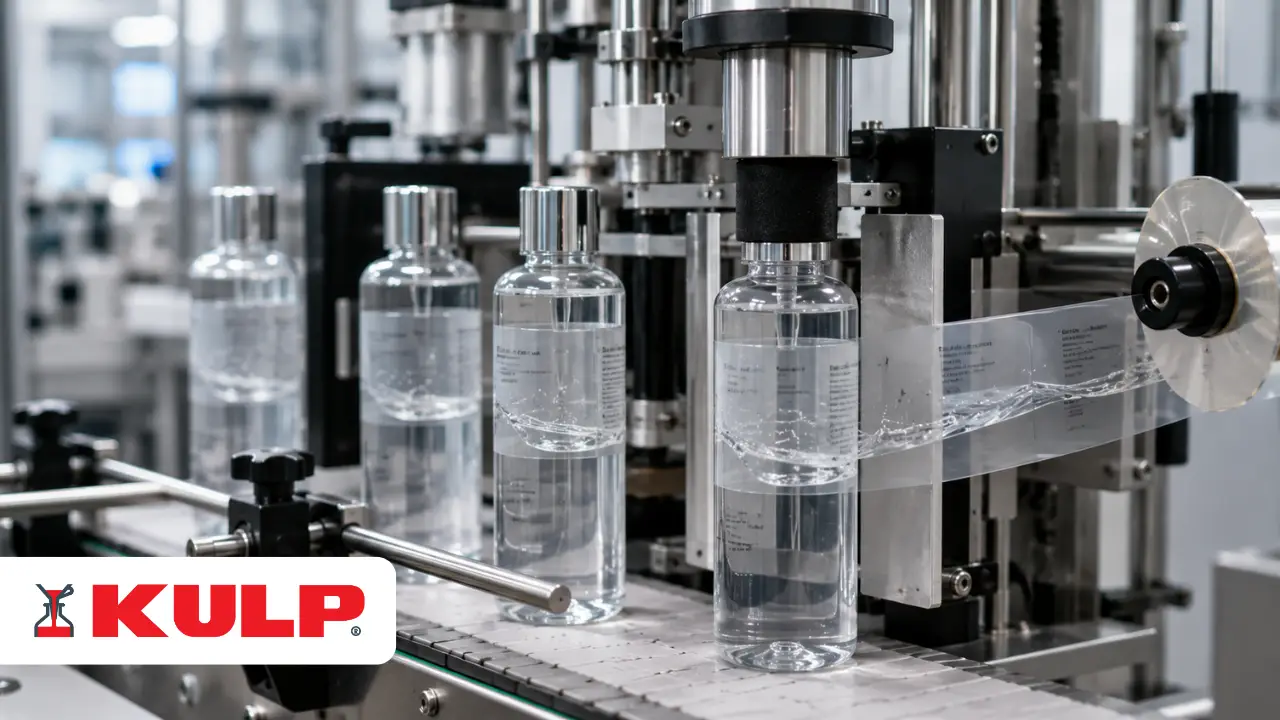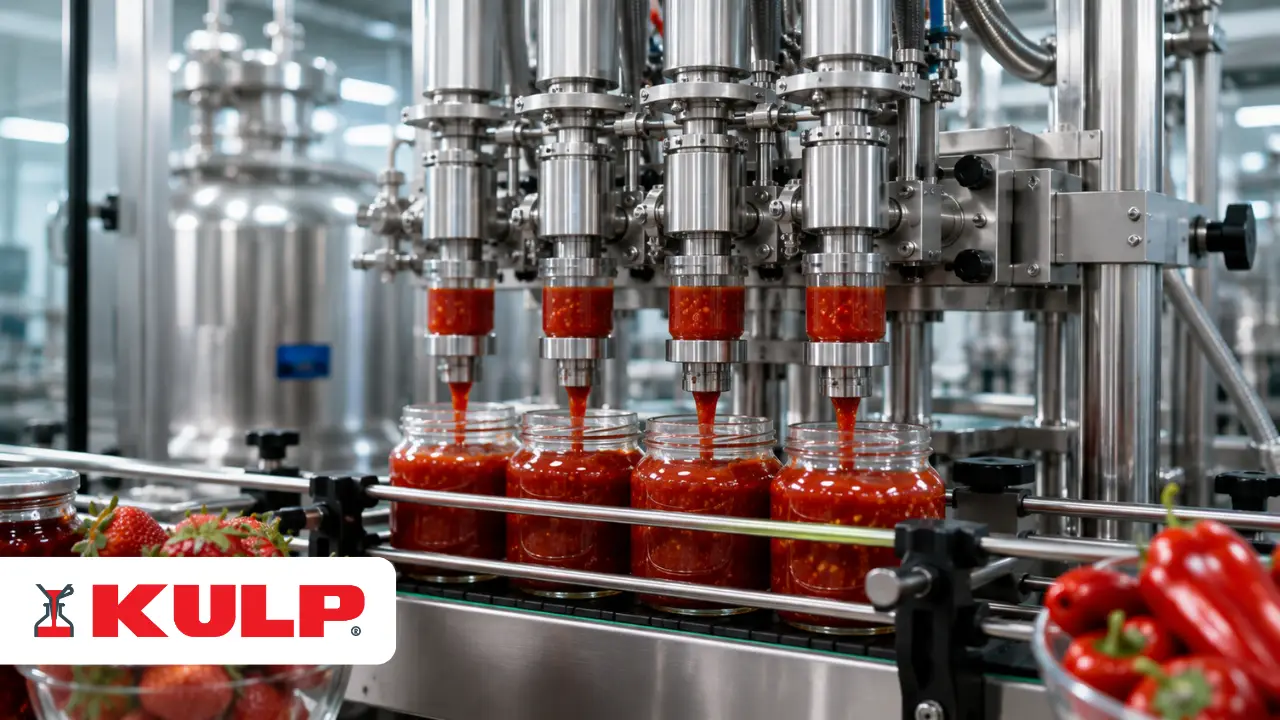
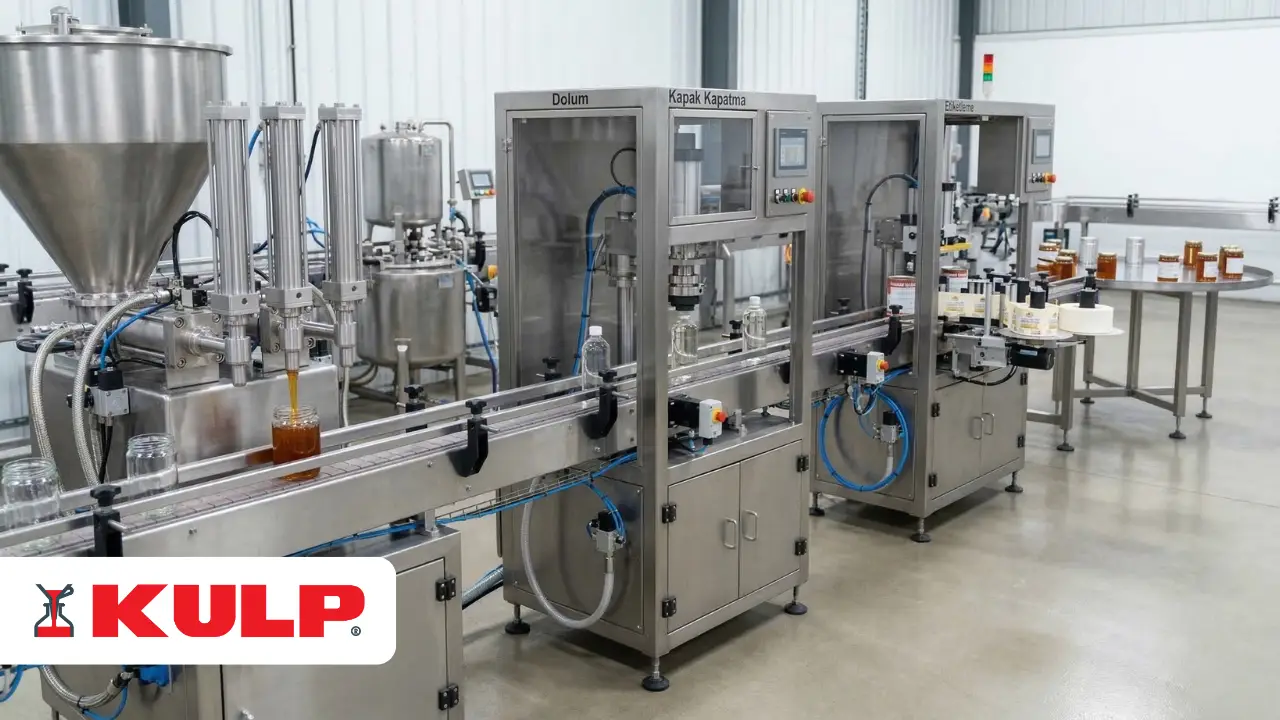
The world of contract manufacturing (co-packing) is the most dynamic, demanding, and unforgiving frontier in the industrial sector. While a dedicated brand manufacturer enjoys the luxury of filling the exact same shampoo into the exact same bottle 365 days a year, a contract manufacturer lives in a state of constant operational flux. As a co-packer, you might be required to fill a premium, highly viscous anti-aging cream into 50 ml glass jars on a Tuesday morning, only to tear down the line and switch to packaging an aggressive, low-viscosity industrial solvent into 1-liter PET bottles by Tuesday afternoon.
When evaluating co-packing production lines as a mechanical engineer, one fundamental truth always emerges: A contract manufacturer is not merely selling the final packaged product. A contract manufacturer is actively selling their “time,” their “operational flexibility,” and the “adaptive capability” of their factory floor.
If the filling machinery in your facility bleeds hours of valuable production time whenever you transition from one client’s product to another, that machine is not generating profit; it is silently draining your working capital. The ultimate determinant of profitability for co-packers—whether operating as a nimble SME or a massive multinational facility—is the “flexibility” and the “rapid changeover” (setup) capability of their packaging infrastructure.
Purchasing a dedicated, single-purpose filling line for every new client contract would require an infinite CAPEX budget and a factory the size of a football stadium. Commercially, this is an entirely unsustainable business model. So, how do you flawlessly accommodate dozens of different brands, hundreds of unique bottle geometries, and products with wildly varying chemical viscosities using a single, unified production line? This is the comprehensive engineering anatomy of Kulp Machinery’s highly flexible filling and packaging technologies, specifically designed to rescue contract manufacturers from the brink of operational inefficiency.
CHAPTER 1: The Co-Packer’s Ultimate Enemy – Downtime and Setup Delays
For a contract manufacturer, every single minute that a conveyor belt stands still equates to direct financial loss. In production planning, the critical window of time between finishing Client A’s production run and starting Client B’s production run is known as the “Format Changeover” or “Setup Time.”
On traditional, legacy equipment or budget machinery imported from unreliable Far East suppliers, this transition process is an absolute operational nightmare. Consider the mechanical steps required to switch from a 250 ml round bottle to a 500 ml square bottle on an outdated line:
Operators must locate their toolboxes and completely halt the line.
The conveyor guide rails must be unbolted and manually adjusted by “eye” to fit the new bottle width.
Optical sensors must be unscrewed, physically relocated, and recalibrated.
The height of the filling nozzles must be manually loosened with Allen wrenches, adjusted, and re-tightened individually.
The capping machine’s chucks or star-wheels must be physically unbolted and replaced with new, expensive format parts.
Worst of all, the operators must perform endless “trial and error” runs to dial in the correct fill volume and label alignment, wasting dozens of liters of your client’s expensive bulk product and countless empty bottles in the process.
In this primitive scenario, transitioning from one product format to another can easily consume 2 to 4 hours. If your facility changes formats twice a day, a staggering 8 hours of your shift is wasted purely on turning wrenches. During that downtime, you are still paying hourly labor wages, consuming factory electricity, and utilizing warehouse space, yet zero commercial products are coming off the belt. Therefore, in contract manufacturing, the most critical engineering metric is not necessarily “how fast the machine fills,” but rather “how rapidly the machine adapts to a completely new product.”
CHAPTER 2: The Engineering of Rapid Changeover (Tool-Less Design)
To eradicate the devastating setup times that plague co-packers, Kulp Machinery rigorously applies the principles of SMED (Single-Minute Exchange of Dies)—the cornerstone of lean manufacturing—directly into our machine architecture. On our next-generation flexible filling lines, your operators will rarely, if ever, need to pick up a wrench or a screwdriver.
The transition process to a new packaging format is engineered to be entirely “tool-less”:
Numbered Adjustment Cranks: The conveyor side barriers, the vertical height of the diving nozzles, and the capping elevators are all equipped with precision mechanical or digital counters (numerators). For example, the perfect setting for Client A’s bottle is recorded as “145”, and Client B’s bottle is “210”. The operator simply turns the hand-crank until the dial reads the correct number. The era of guessing and trial-and-error is over; production begins with zero mechanical faults.
Smart PLC Recipe Memory: When a bottle size changes, it is not just the mechanical dimensions that shift; the software parameters—such as fill volume, servo motor acceleration curves, nozzle diving speed, and labeling delay—must also change. On Kulp Machinery lines, the Human Machine Interface (HMI) touchscreen allows you to save hundreds of unique “Product Recipes.” The moment your operator selects “Client X – 500ml Shampoo” from the digital menu, the PLC automatically recalibrates all volumetric parameters and servo speeds within milliseconds.
Quick-Release Pneumatics: When product pathways, nozzles, or hoses need to be swapped for different chemical compatibility, we utilize quick-release pneumatic jacks and sanitary fittings rather than threaded bolts.
Thanks to this highly intentional engineering infrastructure, those nightmarish 4-hour format changeovers are aggressively reduced to a mere 15 to 30 minutes on a Kulp Machinery line. Gaining an extra 3.5 hours of active production time every single day translates into hundreds of thousands of dollars in additional annual revenue for a contract manufacturer.
CHAPTER 3: The Cross-Contamination Nightmare & The “Tri-Clamp” Hygiene Standard
The most severe quality control risk a co-packing facility must navigate is “Cross-Contamination.” On the exact same filling line, you might be required to process organic peanut butter (a severe food allergen) in the morning, and an allergen-free strawberry preserve in the afternoon. Alternatively, in the chemical sector, you might fill a silicone-based automotive tire shine, followed immediately by a highly sensitive, hypoallergenic baby shampoo.
If even a microscopic residue of the previous product remains hidden inside the machine’s internal piping, valves, or piston cylinders, the consequence is not just spoiled product. It can lead to catastrophic brand damage for your client, massive product recalls, and crippling legal liabilities for your co-packing business.
On conventional filling machines, executing a thorough Cleaning in Place (CIP) process requires dismantling the machine block by block, a process that takes hours. A co-packer simply does not have that luxury of time. At Kulp Machinery, we solve this critical vulnerability through uncompromising hygiene standards:
Polished AISI 316L Stainless Steel: Every single surface that makes contact with the bulk product is machined from AISI 316L quality stainless steel—the absolute zenith of medical and food-grade norms. The internal surfaces are specially electro-polished to eliminate micro-abrasions, preventing any bacterial adherence or chemical staining.
Tri-Clamp (Sanitary Butterfly) Connections: Hoses, rigid pipes, rotary valves, and piston throats are never connected using standard threaded bolts. We exclusively utilize medical-standard Tri-Clamp fittings. Without using a single tool, an operator can simply unclip the clamps by hand, completely dismantling the entire fluid pathway in under 5 minutes for a deep, verifiable wash.
Optimized Fluid Dynamics for Flushing: When hot water, caustic soda, or industrial sanitizers are circulated through the system, the internal fluid mechanics are engineered to ensure there are absolutely zero “dead legs” (blind spots where the flushing liquid cannot reach and clean).
When transitioning from an aggressive chemical to a sensitive cosmetic, your cleaning protocol is rapid, definitive, and 100% reliable. As a contract manufacturer, you can confidently guarantee your global clients that your production lines operate under strict, zero-contamination hygiene protocols.
CHAPTER 4: Mastering Viscosity Variance – From Water to Paste on a Single Line
When a new client knocks on a co-packer’s door, it is impossible to predict what kind of chemical formulation they will bring. One day, you might secure a contract for a highly fluid, water-like glass cleaner. The very next day, you might receive an order for a dense, heavy clay face mask or a highly viscous industrial grease that a standard pump cannot even pull from a barrel.
If your machinery portfolio is highly specialized and restrictive, you would need a dedicated flowmeter line for the liquids, and a completely separate heavy-duty pneumatic line for the pastes. The “Flexible Servo-Driven Piston Filling Lines” engineered by Kulp Machinery permanently eliminate this expensive dilemma.
Our volumetric pistons, driven by advanced servo motor technology, dynamically adjust their torque, speed, and acceleration profiles with millimeter precision based entirely on the specific viscosity (flow resistance) of the product being processed.
For Low-Viscosity (Fluid) Products: The servo pistons execute highly rapid suction and discharge strokes, operating at maximum efficiency. To prevent splashing, we deploy specialized narrowed nozzles that laminarize the liquid flow.
For High-Viscosity (Thick) Products: The servo motor exponentially increases the suction torque to pull dense pastes into the cylinder. Furthermore, we integrate Double-Jacketed Heated Hoppers and Motorized Agitators (Mixers) directly into the machine’s feeding tank. This ensures that naturally solidifying products (like wax or petroleum jelly) are heated and rendered perfectly fluid before filling. Our wide-channel rotary valves effortlessly transfer these heavy pastes into the bottle without any mechanical strain.
This profound flexibility extends directly to our Nozzle technology. If you receive a contract for a highly foaming detergent, the HMI screen allows you to switch the machine into Bottom-Up (Diving) Filling mode. The nozzles dive to the bottom of the empty bottle and rise synchronously with the liquid, completely eliminating foam generation. If you receive an order for thick, stringy honey, our Anti-Drip Pneumatic Nozzles engage, utilizing a rapid “suck-back” mechanism to cleanly cut the product thread, ensuring the bottle threads remain immaculately clean. The modern co-packer loses the burden of saying, “We cannot process this product”; you gain the ultimate engineering confidence to accept virtually any contract that enters your facility.
CHAPTER 5: Capping and Labeling Flexibility – A Solution for Every Client
Dispensing the liquid into the container is only one dimension of the packaging process. In contract manufacturing, the true operational chaos frequently occurs at the capping and labeling stations. Client A demands a trigger sprayer; Client B requires a lotion dispenser pump; Client C wants a standard flat screw cap; and Client D specifies a complex push-pull sports cap.
Capping machines that rely on fixed, customized format molds are the ultimate bottleneck for co-packers. At Kulp Machinery, we engineer our automatic capping units utilizing Universal Spindle Tightening Disks or Servo-Driven Torque Chucks.
Regardless of the cap’s diameter or height, our cap feeding elevators and vibratory sorting bowls feature universally adjustable guide channels.
Our capping lines are designed with a modular architecture to accommodate complex closures. If an operator needs to manually place a long dip-tube pump into a bottle before the machine tightens it, we provide ergonomic staging zones.
Similarly, our labeling modules are hybrid systems. A single Kulp labeling machine can be adjusted to apply a full wrap-around label on a cylindrical bottle, and then reconfigured to apply double-sided (front and back) labels on a square or flat bottle. Equipped with advanced optical sensors, the system can flawlessly detect and apply any material, from ultra-clear “no-look” transparent labels to highly reflective opaque metallic foils.
CHAPTER 6: The Global ROI – Why Importing a Kulp Machine is the Ultimate Strategy for Co-Packers
As an international contract manufacturer, your profit margins are already heavily compressed by your demanding clients. Attempting to lower your initial capital expenditure (CAPEX) by importing machinery from low-cost Far East suppliers—machines that claim to be “flexible” but severely lack structural engineering integrity—is the most fatal strategic error a co-packer can make.
Consider the reality of co-packing: Your largest client calls on a Friday afternoon demanding that 50,000 units be securely palletized and shipped by Monday morning. What happens if the proprietary touchscreen on your budget Asian machine burns out on Saturday night, or a non-standard valve fractures under pressure? Emailing a trading company in China and waiting three weeks for a replacement part to clear international customs means you will default on your contract, lose your client permanently, and likely face devastating financial penalties.
At Kulp Machinery, every single flexible line we manufacture in our Istanbul facility is built upon a backbone of universally available, Tier-1 global components. We exclusively utilize Festo or SMC for our pneumatics, and Siemens, Schneider, or Delta for our PLCs and servo drives. Even in the absolute worst-case scenario of a component failure, you can source that exact replacement part instantly from a local industrial supplier in Ohio, Manchester, or Sydney.
Furthermore, if you encounter a complex parameter issue during a frantic format changeover in the middle of the night, our machines are equipped with Secure Remote Access Modules. A Kulp engineer in Turkey can securely log into your machine’s PLC via the internet, diagnose the software, adjust the servo parameters in real-time, and save your production run from catastrophic downtime. A global contract manufacturer does not just need stainless steel; you require an engineering partner who speaks your industrial language, stands behind their technology 24/7, and guarantees your operational continuity.
Global FAQ – Exclusively for Contract Manufacturers
1. As a co-packer, I process products with drastically different filling temperatures. Will the machine seals survive? Standard budget machines utilize generic NBR rubber seals, which rapidly melt and deform when exposed to varying chemicals or hot-fill processes (e.g., 85°C fruit preserves). Because Kulp Machinery specifically designs for the extreme variance of co-packing environments, we standardize all product-contact O-rings and seals using aerospace-grade Viton or Teflon (PTFE). These advanced polymers are impervious to extreme heat and highly aggressive acidic chemicals.
2. I have a massive variance in bottle sizes. What are the mechanical limits for changeovers on a single line? While ultimately dependent on the specific conveyor chassis size you select, a standard Kulp flexible filling line can effortlessly transition from a tiny 50 ml cosmetic jar all the way up to a 1000 ml (1 Liter) industrial bottle. This massive volumetric jump is achieved entirely through digital recipe selection and turning numbered adjustment cranks, without purchasing or changing a single structural mold.
3. My clients frequently supply asymmetrical, highly unstable custom bottles. Can your machines handle unique geometries? Absolutely. Highly asymmetrical, oval, or reverse-tapered custom bottles are notorious for falling over on standard conveyors. For advanced co-packing projects, we engineer specialized alignment rails or integrate Custom Puck (Carrier Mold) Systems. Regardless of how physically unstable or oddly shaped the client’s bottle is, it is placed into a stable puck, ensuring it remains millimeter-perfect during the entire filling, capping, and labeling process.
4. If my co-packing business secures a massive contract, will I have to discard this machine and buy a faster one? Never. The greatest promise Kulp Machinery offers to contract manufacturers is “Absolute Modularity.” You can begin your operations today with a manually-fed, semi-automatic volumetric filler. Next year, when your contracts multiply, you do not throw that machine away. We simply take that core filling unit, integrate an automatic rotary unscrambler in front of it, place it over a motorized conveyor, and attach automated capping and labeling modules behind it, instantly upgrading your system to a high-speed, fully automatic industrial line. Your capital investment is always protected.
5. I am terrified of wasting my client’s highly expensive organic serums during trial-and-error setups. Is the weight calibration difficult? The era of adjusting mechanical levers and guessing the weight is obsolete. On our servo-driven HMI systems, the operator simply types the “Target Weight” (e.g., 250 grams) into the touchscreen. The system self-calibrates on the very first cycle, operating at a guaranteed accuracy of ±0.5% (five per thousand). You will never again flush your client’s priceless organic oils or expensive fragrances down the drain simply trying to configure the machine.
Validate Your Co-Packing Future with a Virtual FAT
As a contract manufacturer, you must constantly prove your capabilities to your clients. At Kulp Machinery, we are prepared to prove our engineering superiority to you. Do not base the core infrastructure of your factory on glossy brochures or empty sales promises.
Gather the 3 most difficult products in your current portfolio—the thickest paste, the most aggressive foaming chemical, and the most asymmetrical bottle you possess. Ship them directly to our headquarters in Istanbul.
We will schedule a live, multi-camera Virtual Factory Acceptance Test (FAT). You will watch via video conference as we run your specific products on our flexible lines. Start your stopwatch and witness exactly how rapidly we execute a full product changeover. Verify the zero-drip nozzle technology, and watch how seamlessly the Tri-Clamp fittings are dismantled for a rapid CIP wash.